
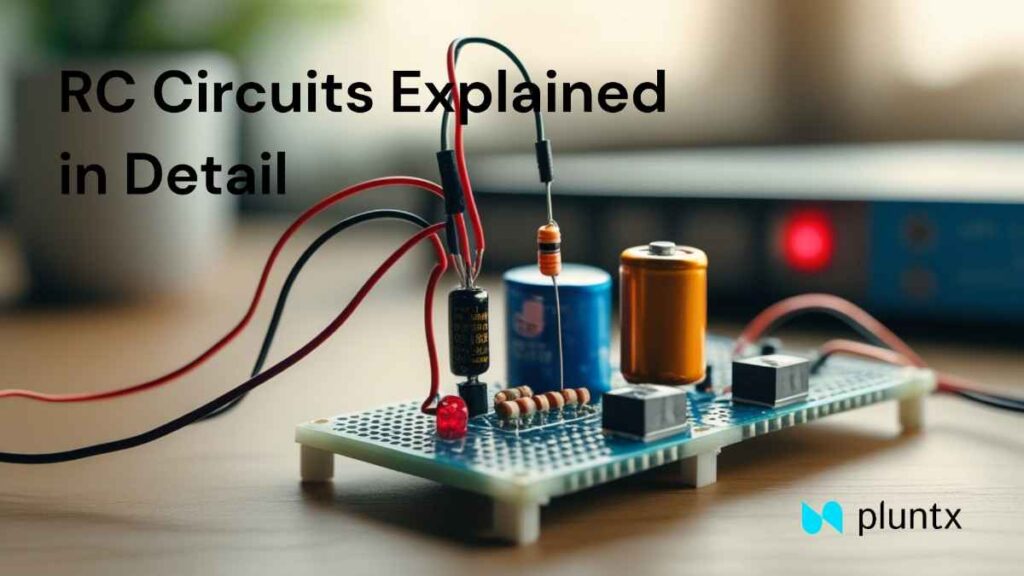
Every electronic system—from a simple LED flasher to advanced signal-processing hardware—depends on how voltage and current change over time. One of the simplest yet most powerful ways engineers control time in electronics is through RC circuits.
RC circuits are often the first step into analog electronics, helping learners understand how circuits respond dynamically rather than instantly. In this blog, we will explore RC circuits from the ground up, understand their physics, equations, behavior, applications, and why they are still relevant in modern electronics.
What is an RC Circuit?
An RC circuit is an electrical circuit composed of:
R – Resistor
C – Capacitor
These two components are connected with a voltage source to form a system where energy is stored, controlled, and released over time.
Unlike purely resistive circuits, RC circuits do not respond instantly. Instead, they exhibit time-dependent behavior, which is the foundation of timing, filtering, and signal shaping.
Understanding the Role of Each Component
Resistor (R)-
A resistor limits the flow of current. In an RC circuit, the resistor determines:
How fast the capacitor charges
How quickly energy is dissipated
The slope of voltage change
Measured in Ohms (Ω), resistors act like a valve controlling the flow of electrical energy.
Capacitor (C)-
A capacitor stores energy in the form of an electric field between two plates. Its behavior includes:
Charging when connected to a voltage source
Discharging when the source is removed
Releasing energy gradually
Capacitance is measured in Farads (F).
How an RC Circuit Works
When a DC voltage is applied to an RC circuit:
Current starts flowing through the resistor
The capacitor begins charging
Voltage across the capacitor rises gradually
Current decreases exponentially
The capacitor eventually reaches the supply voltage
This non-instantaneous response is what makes RC circuits extremely valuable.
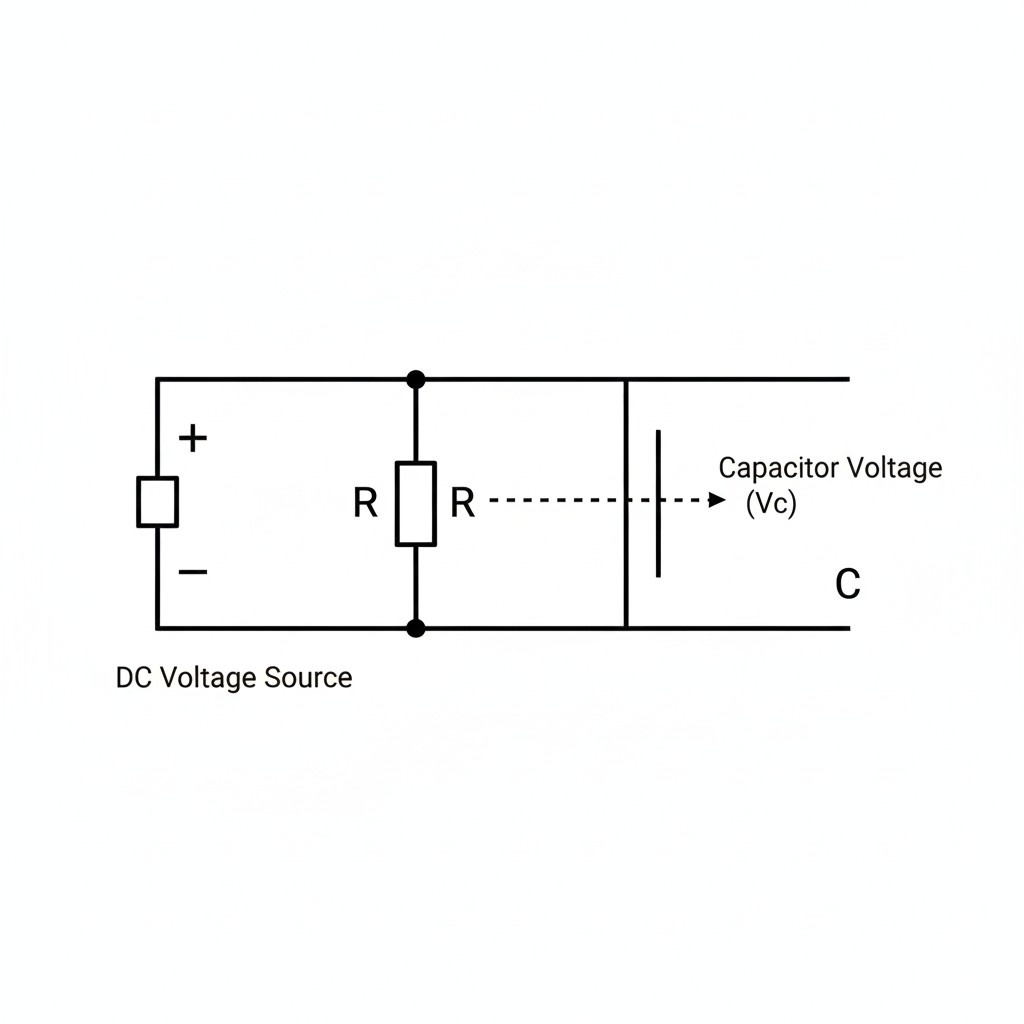
Capacitor Charging in RC Circuits
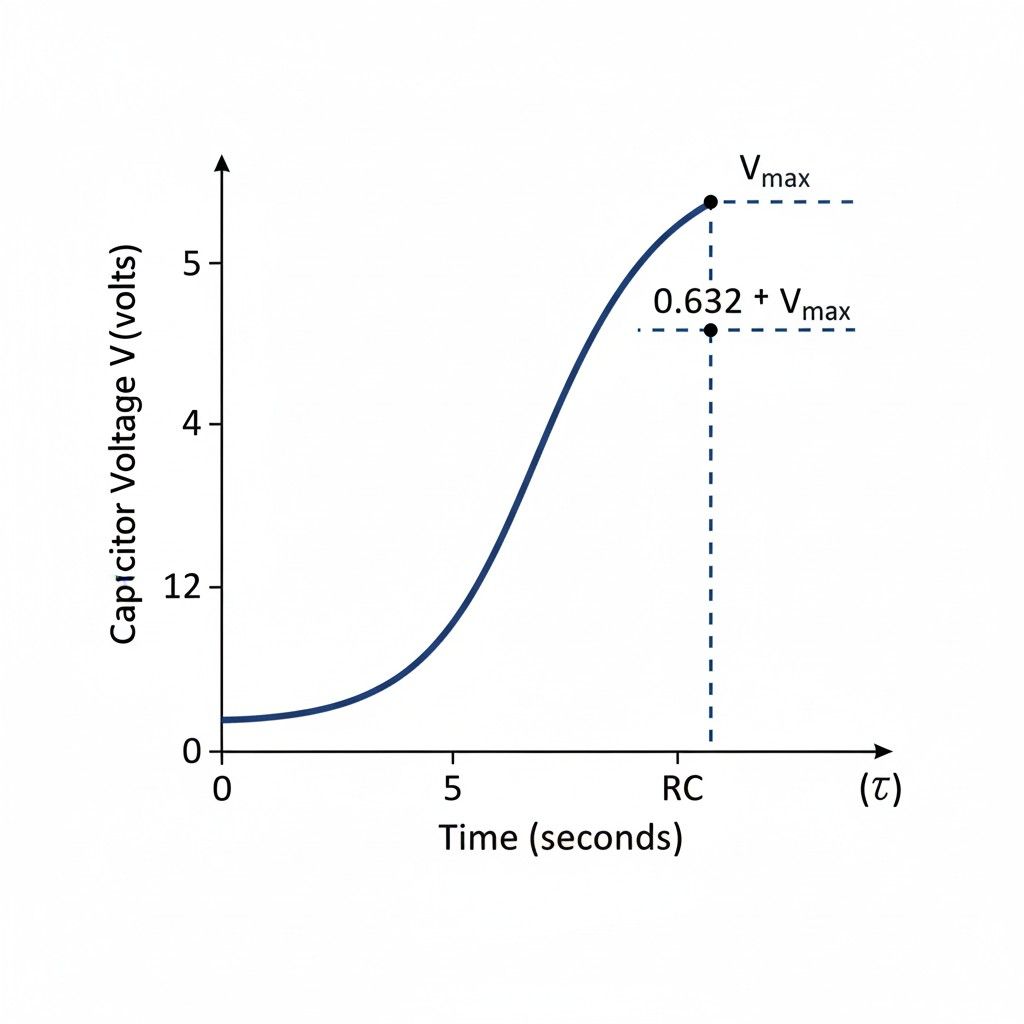
During charging, the capacitor voltage follows an exponential curve:
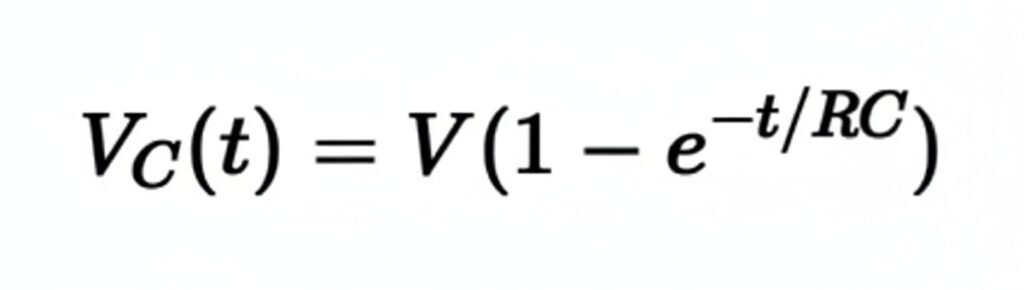
Where:
VC(t) = voltage across capacitor
V = supply voltage
R = resistance
C = capacitance
t = time
This equation shows that the capacitor never charges instantly—it asymptotically approaches the final voltage.
Capacitor Discharging in RC Circuits
When the voltage source is removed, the capacitor releases its stored energy:
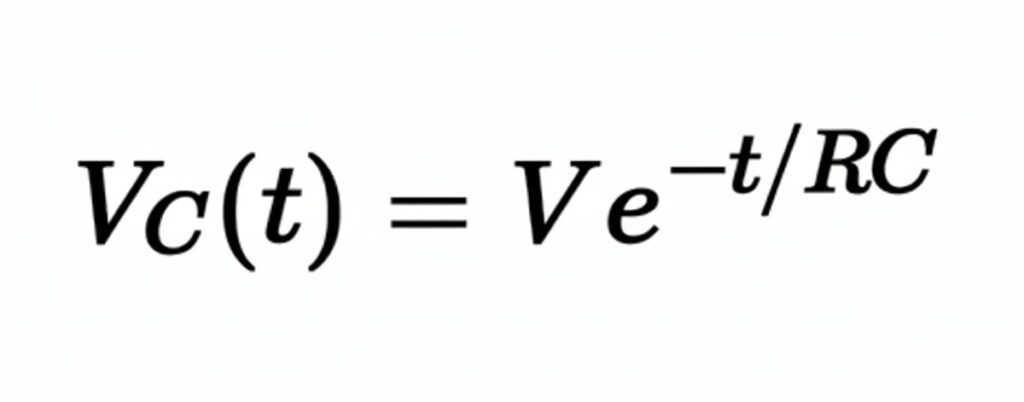
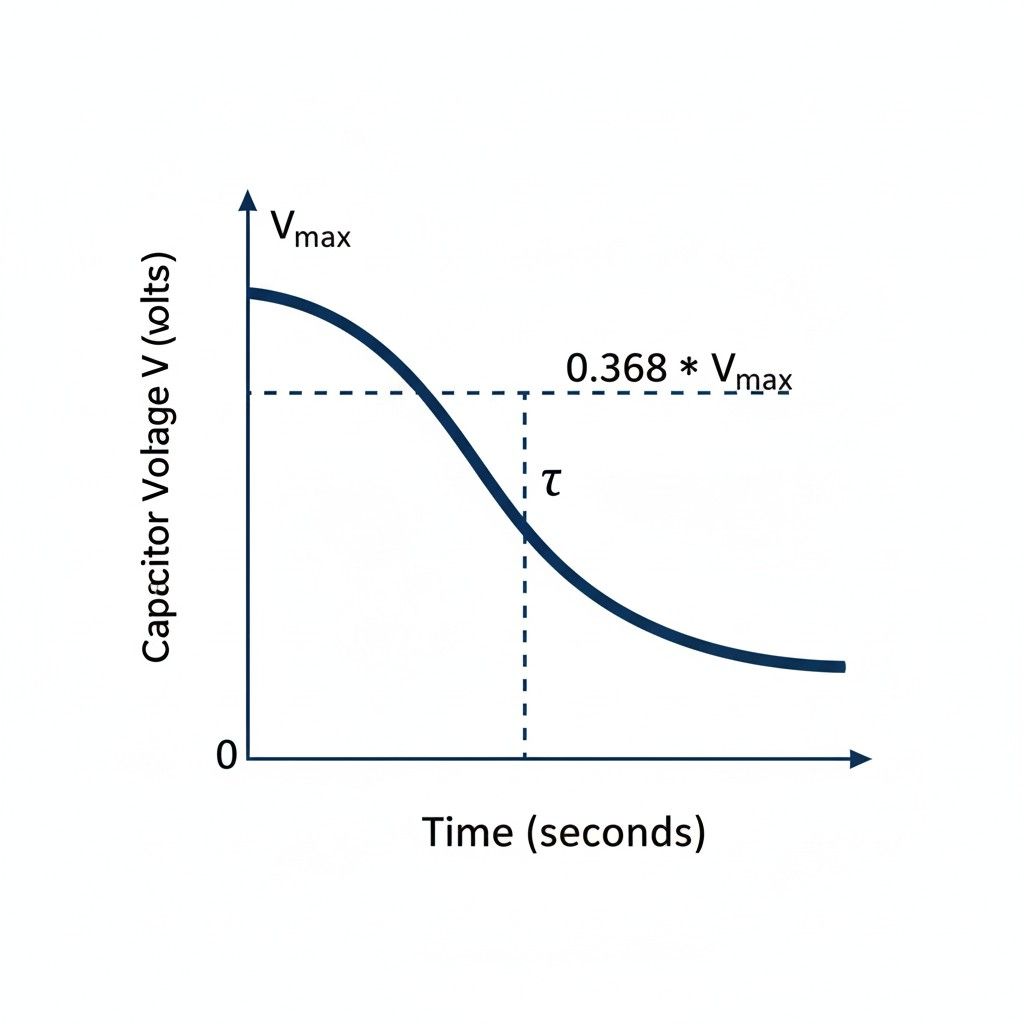
This exponential decay is critical in applications like:
Delay timers
Pulse shaping
Signal smoothing
Time Constant (τ): The Key Concept in RC Circuits
The time constant defines the speed of charging and discharging:
τ=RC
What Time Constant Means
At 1τ → 63% charged
At 2τ → 86% charged
At 3τ → 95% charged
At 5τ → Nearly fully charged
The time constant directly controls how fast the circuit responds.
RC Circuits in the Time Domain
RC circuits are often analyzed in the time domain because their voltage and current vary with time. This makes them ideal for:
Transient analysis
Delay generation
Signal conditioning
They teach beginners how real circuits behave beyond ideal assumptions.
RC Circuits as Filters
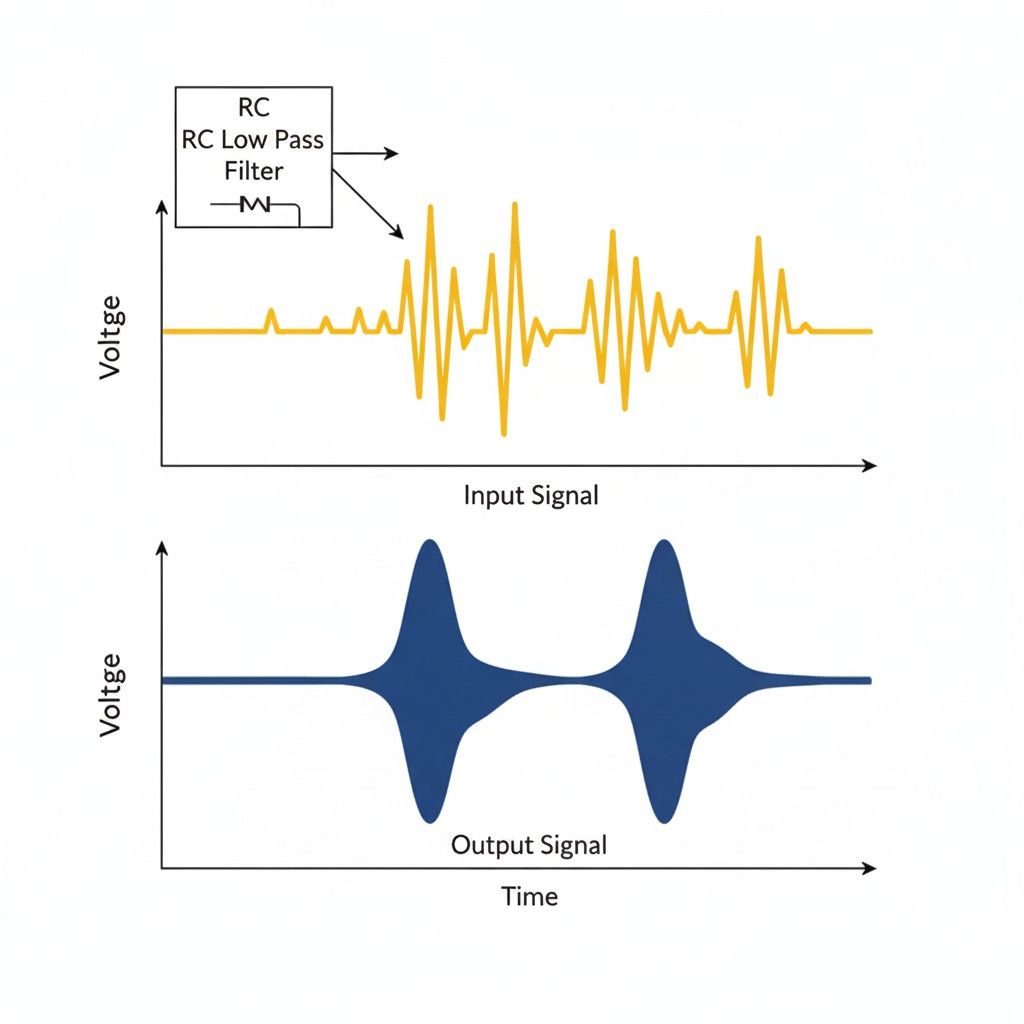
RC Low-Pass Filter
Passes low-frequency signals
Attenuates high-frequency noise
Used in audio electronics and sensors
RC High-Pass Filter
Passes high-frequency signals
Blocks DC and low frequencies
Used in coupling and communication circuits
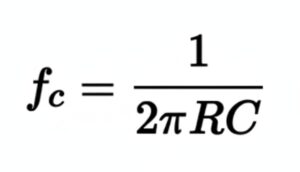
Cutoff frequency:
Practical Applications of RC Circuits
RC circuits are everywhere:
Timing circuits
LED fading and dimming
Button debouncing
Power-on reset circuits
Signal smoothing in ADCs
Noise filtering
Oscillator building blocks
Even in digital electronics, RC circuits quietly support stable operation.
Example Calculation
Let:
R = 47 kΩ
C = 10 µF
τ=47,000×10×10−6=0.47 seconds
This means the capacitor takes 0.47 seconds to reach 63% of its final voltage.
Common Mistakes in RC Circuit Design
Choosing incorrect capacitor polarity
Ignoring leakage currents
Using unrealistic resistor values
Expecting instant response
Forgetting discharge paths
Understanding these avoids unstable and unpredictable designs.
Why RC Circuits Are Still Important Today
Even with advanced ICs and microcontrollers, RC circuits remain relevant because:
They are simple and reliable
They require no programming
They are cost-effective
They work at hardware speed
RC circuits form the foundation of analog electronics, and mastering them opens doors to filters, amplifiers, and control systems.
Final Thoughts
RC circuits teach us that electronics is not just about voltage and current—it’s about time. By understanding RC behavior, you gain insight into how real-world circuits respond, store energy, and shape signals.
If you truly want to master electronics, start with RC circuits and never skip them.
About pluntx

Pluntx is India’s leading platform for electronics and 3D printing solutions, offering a wide range of products like Arduino, Raspberry Pi, drone parts, sensors, 3D printer components, and more. We also provide expert CAD design services and affordable 3D printing, starting at just ₹49. Click here to explore our extensive collection of electronics and prototyping tools. Be sure to follow us on Instagram and YouTube, where we regularly share tutorials, tips, and updates on everything from Arduino projects to drone technology. Pluntx delivers precision and quality. Our mission is to empower creativity through technology and simplify the journey from concept to creation.